
Why Handcrafted Gelato Tastes Better Than Mass-Produced

Handcrafted gelato is a slow-churned frozen dessert made in small batches with fresh milk (or plant milk), real fruit and natural flavorings, and no preservatives or artificial stabilizers. Compared to ice cream, it has less butterfat, far less air churned in (lower overrun), and is served slightly warmer, which gives it a denser texture and a more intense, immediate flavor. Because it's made fresh daily rather than mass-produced, quality depends on the maker's technique and ingredient sourcing rather than industrial shortcuts.
What Is Handcrafted Gelato and How Does It Differ from Ice Cream?
Handcrafted gelato differs from ice cream through two mechanisms: lower butterfat and much less air churned into the base, which together produce a denser, silkier bite. Ice cream typically relies on higher fat content and a fast churn that pumps large volumes of air into the mix, a process called overrun. Gelato producers deliberately limit that air incorporation, Gelatissimo notes its gelato carries roughly 50% less air than ice cream and less fat overall [3], so each spoonful feels heavier and more concentrated on the tongue.
Temperature plays a role too. Gelato is served several degrees warmer than ice cream, which keeps the fat from numbing the palate the way a harder, colder scoop does. Because taste buds register flavor compounds more readily at warmer temperatures, gelato tends to taste more immediate and pronounced right from the first bite.
What ingredients go into authentic handcrafted gelato?
Authentic gelato starts with fresh milk or a plant-based milk, real fruit and nut purees, and natural flavorings, not stabilizer-heavy industrial mixes built for long shelf life. Andino Gelato, for example, describes working only with fresh, high-quality fruits and juices and avoiding preservatives entirely [1]. That ingredient philosophy is the difference between a dessert that tastes like its namesake fruit or nut and one that tastes like a formulated approximation of it.
Why do gelato makers use different techniques than ice cream producers?
Gelato makers use specialized batch freezers and slower churn speeds rather than the high-speed industrial mixing lines that dominate mass ice cream production. Small batch freezers churn at a pace that limits air incorporation and lets the maker control texture by hand, batch by batch, rather than by formula. That slower, hands-on method is what allows daily fresh production instead of mixes designed to sit in freezers for months.
Is Gelato Actually Healthier Than Ice Cream?
Gelato is not automatically healthier than ice cream, it depends on fat content, added sugar, and portion size, not the label itself.
What are the nutritional differences between gelato and ice cream?
Gelato is churned with less air, a property called overrun, and typically made with lower butterfat than ice cream. That produces a denser, heavier scoop, so a serving that looks the same size as ice cream can weigh more and pack a similar calorie count. The density is the trick: less air means more actual gelato in the same-sized cup, which changes the math people expect from a "lighter" dessert.
The lower fat content matters for a different reason. Fat coats the tongue and dulls flavor perception, and it also carries cold, a high-fat, well-aerated scoop feels colder and blander per bite. With less fat and less trapped air, gelato is served slightly warmer and hits the palate faster, so flavor registers sooner. That can lead people to feel satisfied with less, though that's a behavioral tendency, not a guarantee.
Portion size is the variable people tend to overlook. Because gelato is dense, a modest scoop can deliver as much flavor satisfaction as a larger serving of aerated ice cream, so the person who orders a small cup instead of a double scoop is often getting a comparable experience for less total volume. None of this makes gelato a health food on its own, sugar content still varies widely from shop to shop, but it does explain why a well-made small portion rarely feels like a compromise.
Does handcrafted gelato offer vegan or allergen-free options?
Yes, well-made plant-based gelato removes dairy fat entirely and relies on technique, not additives, to keep the texture creamy. At V Gelato in Miami, the entire menu is dairy-free and gluten-free, made fresh daily with all-natural ingredients and no preservatives, artificial colors, or artificial flavors. Whether that's "healthier" than a dairy version still comes down to ingredient quality and how much sugar goes into the base, a plant-based label alone doesn't settle the question.
What Makes Handcrafted Gelato Special Compared to Store-Bought Options?
This style of gelato is made in small daily batches with real fruit purees and fresh dairy or plant milk, while mass-produced tubs lean on stabilizers and gums to survive months on a shelf.
That difference starts with technique. A maker trained in formal gelato methods controls overrun (the amount of air churned into a batch), sugar balance, and freezing temperature by hand, batch after batch. At V Gelato, that training traces back to Bologna's Gelato University, and it shows in a menu that stays dense and creamy without dairy at all.
What is the best store-bought gelato if you can't find handcrafted options?
Flip the container and read the ingredient list first, not the flavor name. Look for five to eight recognizable ingredients, milk or a plant milk, sugar, fruit, cocoa, nuts, and be wary of tubs with multiple gums (guar, carob bean, xanthan) stacked together, which usually signal a formula built for shelf stability rather than flavor.
How do award-winning gelaterias source their ingredients?
The strongest gelaterias buy fruit, nuts, and dairy or plant milk close to peak season and adjust the menu around what's fresh, rather than locking in a fixed industrial formula year-round. That's why rotating seasonal flavors are a good sign: a maker swapping in stone fruit in summer or citrus in winter is working with real produce, not a warehouse of pre-made bases.
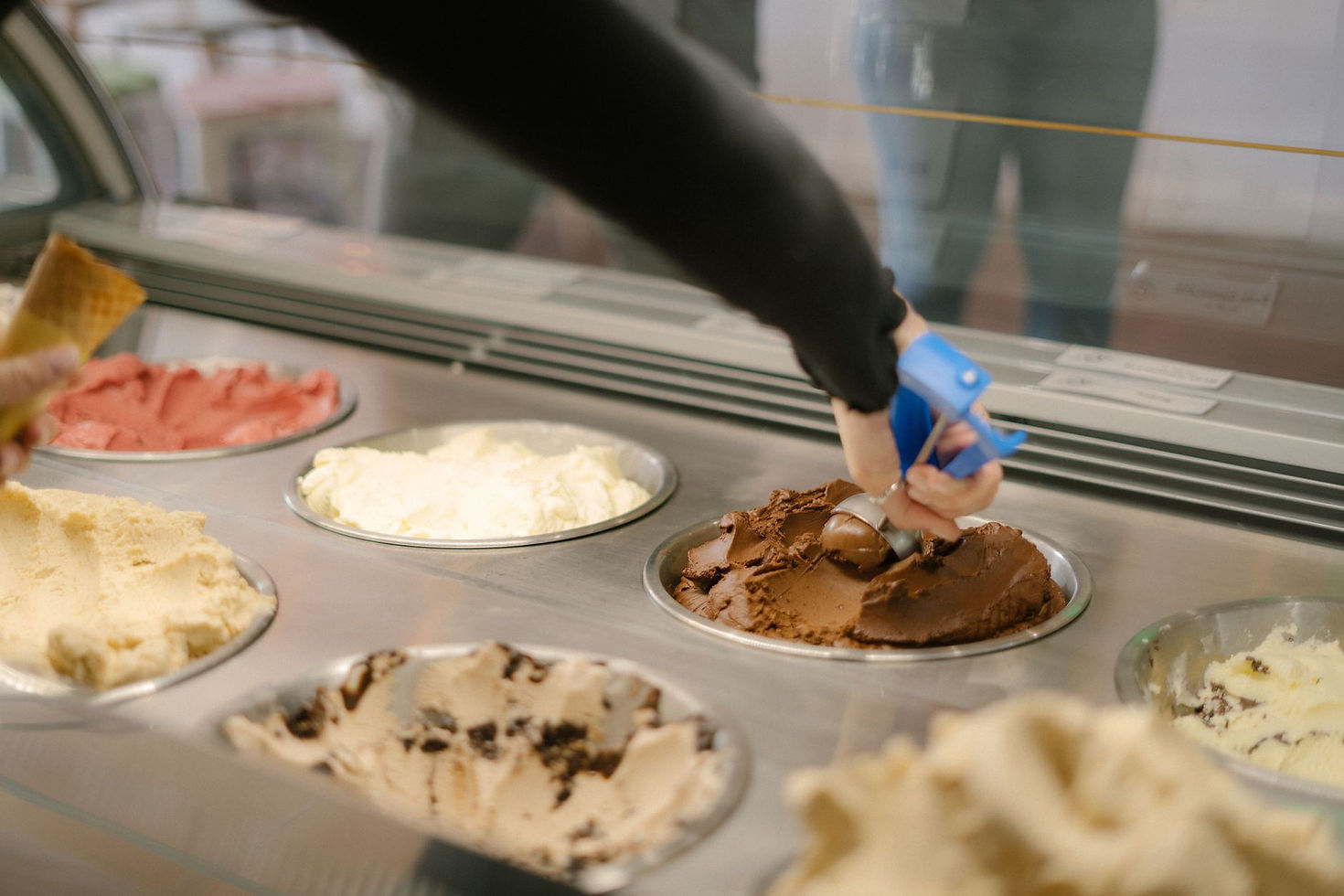
The visual tell is just as useful at the counter. Churned gelato sits matte and dense in the pan, holding its shape, while high-overrun ice cream looks glossy and puffed up from the extra air whipped into it.
How does Italian tradition still shape today's gelato makers?
Plenty of shops outside Italy still build their process around traditional Italian technique rather than inventing shortcuts. Allora Gelato, for instance, structures its menu around classic method, balancing sugar, fat, and overrun by hand instead of leaning on a fixed industrial recipe [2]. That kind of continuity, one maker trained by another, recipes adjusted by taste rather than spreadsheet, is often what separates a shop rooted in craft from one that has simply borrowed the aesthetic without the discipline behind it.
Where Can You Find the Best Handcrafted Gelato Near You?
Look for a shop that makes gelato fresh on-site every day, shows you where its ingredients come from, offers tastes before you order, and rotates flavors with the seasons.
How do you find quality artisan gelato in any city?
Start with what you can see and taste before you buy. A tasting spoon offered without hesitation is one of the clearest signals a shop stands behind its product, mass-produced gelato brands rarely encourage sampling because consistency, not craft, is the point.
• Fresh daily batches: Ask when the flavors were made. A shop producing small batches daily will tell you without checking a label.
• Visible ingredient sourcing: Menus or counter signage that name real ingredients, Sicilian pistachio, Ecuadorian cacao, fresh strawberries, over generic flavor names suggest a kitchen that cares about sourcing.
• A tasting counter: The ability to sample two or three flavors before committing points to confidence in the product.
• Rotating seasonal flavors: A menu that changes with what's fresh, rather than staying static year-round, usually means the kitchen is working with real produce, not stabilized bases.
Checking whether a shop offers dairy-free or plant-based options is also worth doing, even if you eat dairy. A gelateria that treats its vegan menu with the same care as its traditional flavors, matching texture and richness rather than settling for an icy substitute, is usually applying that same discipline across everything it makes. V Gelato in Miami, for instance, built its entire menu around this idea: every flavor is dairy-free and gluten-free, developed by a Maestro trained at Bologna's Gelato University, rather than treating plant-based as an afterthought.
Searching "gelato cafe" instead of "dessert shop" also tends to surface different results. That phrasing points to places built around the fuller Italian ritual, espresso, affogato, Italian soda, rather than a stand-alone freezer case.
Do handcrafted gelato shops offer online ordering or delivery services?
Many now do. Walk-in-only used to be the default for small-batch gelaterias, but a growing number list flavors on delivery apps and support curbside pickup alongside in-person counter service, so checking a shop's app listings before visiting can save a wasted trip if a favorite flavor sold out that day.
Can You Make Handcrafted Gelato at Home?
Home cooks can get close to this style of gelato with the right machine and technique, but matching a professional batch freezer's texture takes practice.
A commercial batch freezer controls overrun (the air whipped into the mix) and churn speed with precision, which is why shop gelato feels denser and silkier than most homemade batches. Home machines churn less consistently, so texture varies from batch to batch even with an identical recipe. This isn't a dealbreaker, it just means home results land closer to "very good" than "gelateria-grade."
What gelato machines do home enthusiasts recommend for making gelato?
Machine choice comes down to how often you plan to make gelato. Budget-friendly compressor machines suit occasional batches, no pre-freezing bowls required, just pour and churn. Frequent makers tend to prefer premium dual-canister models, which let you chill one bowl while churning another and hold temperature more evenly through the process.
Are there gelato subscription services or bulk ordering options for events?
For parties, offices, or larger gatherings, ordering from a shop that offers bulk or catering options is often more practical than DIY. V Gelato, for example, produces small-batch vegan gelato fresh daily and takes orders through pickup and delivery platforms, a simpler route than scaling a home recipe for a crowd.
On the technique side, balance sugar and fat carefully (too little sugar makes gelato icy), start from a tested base recipe, and chill the mix fully, ideally overnight, before churning for a smoother result.
What common mistakes cause homemade gelato to turn icy or grainy?
Most home batches fail for one of three reasons: not enough sugar (which acts as an anti-freeze in the base and keeps ice crystals small), an under-chilled mix going into the machine, or over-churning past the point where the texture is soft-set. Letting the finished batch rest in the freezer for a couple of hours before serving, rather than eating it straight from the machine, also helps the texture firm up evenly instead of staying loose in the middle and icy at the edges.
Frequently Asked Questions
Does handcrafted gelato contain less sugar than ice cream?
Not necessarily less sugar, but this style of gelato usually carries less fat and less air, which makes its flavor taste more concentrated per bite [3]. Because gelato is churned slower and served at a warmer temperature than ice cream, the sweetness and fruit or nut notes come through more directly, so many people feel satisfied with a smaller portion.
How long does handcrafted gelato stay fresh?
Fresh, small-batch gelato is best eaten within a few days of production since it's made without preservatives. At V Gelato, batches are prepared fresh daily, so flavor and texture peak soon after churning rather than after weeks in frozen storage.
Can lactose-intolerant people eat handcrafted gelato?
Yes, as long as the gelato is made without dairy, which eliminates lactose entirely. V Gelato's entire menu is 100% plant-based and gluten-free, so lactose-intolerant customers get the same rich, creamy texture as traditional gelato without any dairy-related discomfort.
What's the difference between gelato and sorbet?
Gelato contains a dairy or plant-based milk base and some fat, while sorbet is made purely from fruit, water, and sugar with no dairy or milk substitute at all. Gelato has a denser, creamier texture; sorbet is lighter and more icy, closer to a fruit ice.
Is handcrafted gelato suitable for catering large events?
Yes, but it requires more planning than mass-produced ice cream because small-batch production is limited by daily capacity. Event organizers should confirm flavor quantities and pickup or delivery timing in advance with the gelateria, since small-batch production isn't made to scale on short notice like factory-produced desserts.
Conclusion
Handcrafted gelato earns its name through daily small-batch production, natural ingredients, and a maestro's training, not marketing language. The texture, ingredient list, and freshness timeline all separate it from mass-produced ice cream and vegan alternatives that rely on stabilizers or industrial batching. Shops like Andino Gelato and Allora Gelato show that this discipline can look different from one kitchen to the next, seasonal Texas fruit versus classic Italian method, while still sharing the same core commitment to fresh, hand-controlled production. If you're evaluating a gelateria, ask when the flavors were made and what's actually in them before you order. Next time you're in Wynwood, stop by V Gelato and taste a flavor made that same day, it's the clearest way to understand what "handcrafted" is supposed to mean.
Sources & References
Recommended Articles
Explore more from our content library:
About the Author
Written by the Food & Beverage / Dessert Retail experts at V Gelato | Gelateria & Cafe. Our team brings years of hands-on experience helping businesses with Food & Beverage / Dessert Retail, delivering practical guidance grounded in real-world results.


Comments