

Everything You Need to Know About Gelato Nutrition Facts

Understanding gelato nutrition facts is essential. A standard 3.5 oz (100g) serving of gelato contains roughly 160–220 calories, 4–8g of fat, 25–35g of carbohydrates, and 20–28g of sugar, with 3–5g of protein. Gelato uses less cream and more milk than ice cream, so fat content runs lower, but sugar is comparable. Flavor type, dairy vs. plant-based base, and artisanal vs. commercial production all shift those numbers meaningfully.
Gelato Nutrition Facts: Calories, Fat, Sugar, and Key Nutrients Per Serving
A 100g serving of dairy gelato delivers 160–220 calories, 4–8g fat, 25–35g carbohydrates, and 3–5g protein, numbers that shift by flavor and base ingredient.
How many calories, fat, and sugar are in a typical serving of gelato?
The fat range in gelato nutrition facts, 4–8g per 100g, with 2–5g saturated, sits 25–35% below standard American ice cream [2]. That gap exists because traditional gelato uses whole milk as its primary base rather than heavy cream. This is a structural recipe difference baked into the formula, not a health claim added after the fact.
Sugar runs 20–28g per 100g for dairy-based gelato, comparable to ice cream, not lower. Fruit-based sorbetto-style gelato (no dairy, no cream) drops fat to near zero, but sugar stays elevated at 22–30g per 100g from fruit solids and added sweeteners [1].
Sodium is where gelato stands apart from most desserts. A typical serving contains just 40–70mg, well below a slice of cake or a handful of cookies, which can exceed 200–300mg.
"Gelato's lower fat content compared to ice cream is a direct result of its traditional formulation — more milk, less cream — which also contributes to its characteristically denser, silkier texture." — Dr. Maria Calogero, Food Scientist and Dairy Nutrition Researcher
What key nutrients does gelato provide per serving?
Dairy gelato contributes roughly 8–10% of the daily value (DV) for calcium per 100g serving, plus 4–6% DV phosphorus, and smaller amounts of potassium and vitamin A [1]. These are meaningful numbers for a dessert, though gelato is not a substitute for whole food nutrition sources.
According to the USDA National Agricultural Library, dairy-based frozen desserts provide measurable amounts of calcium, phosphorus, and riboflavin — nutrients that contribute to bone health and energy metabolism. Gelato's milk-forward formula means it captures more of these benefits than cream-heavy alternatives.
Plant-based gelato, like the small-batch, all-natural formula crafted daily at V Gelato, shifts the micronutrient profile depending on the base: oat, coconut, or nut milks each carry different calcium and fat compositions. Checking the specific base ingredient matters more than relying on a generic plant-based estimate.
Here is a quick summary of the key nutrients found in a standard 100g dairy gelato serving:
• Calories: 160–220 kcal
• Total fat: 4–8g (of which 2–5g saturated)
• Carbohydrates: 25–35g
• Sugar: 20–28g
• Protein: 3–5g
• Calcium: 8–10% daily value
• Phosphorus: 4–6% daily value
• Sodium: 40–70mg
How Gelato Nutrition Varies by Flavor and Production Method
Gelato nutrition facts shift significantly by flavor category and how the gelato is made — a chocolate scoop can carry 45 more calories per 100g than a lemon sorbet.
How Do Chocolate, Vanilla, and Fruit-Based Gelato Flavors Differ Nutritionally?
Chocolate gelato averages 10–15% more calories than vanilla per 100g. Cocoa solids and higher sugar content push a 100g chocolate serving to roughly 230 calories, while vanilla typically lands around 185 calories [1].
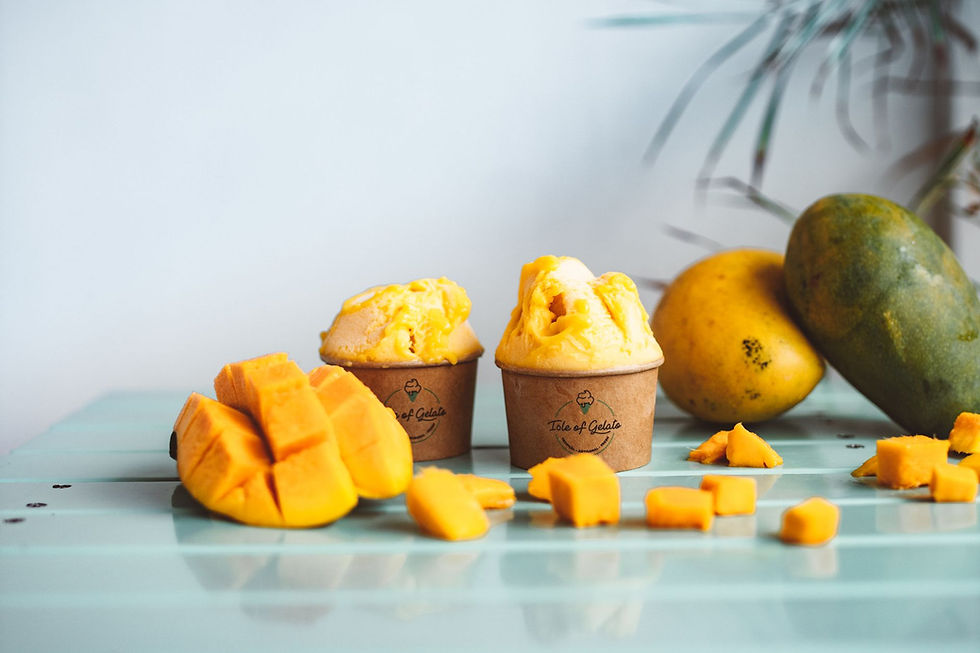
Fruit-based flavors — strawberry, lemon, mango — run 120–150 calories per 100g with near-zero fat, making them the lightest option by calorie count. The catch: sugar content can match or exceed dairy-based flavors when producers add sweeteners to balance tartness [2].
Nut-based flavors like pistachio and hazelnut sit at the opposite end of the fat scale, reaching 10–12g of fat per 100g. A meaningful portion of that fat is unsaturated, coming directly from the nuts, so the fat profile is nutritionally different from cream-driven richness. According to the American Heart Association, replacing saturated fats with unsaturated fats from sources like nuts supports cardiovascular health — a distinction worth noting when choosing between flavors.
What's the Nutrition Difference Between Artisanal and Commercial Gelato Brands?
Artisanal gelato made fresh daily typically uses 5–8 whole ingredients with no stabilizers or fillers. Commercial tubs frequently add maltodextrin, corn syrup, or mono/diglycerides — additives that push carbohydrate counts up 15–20% without adding flavor.
Plant-based gelato adds another variable. Coconut-milk bases can match or exceed dairy fat levels, while oat-milk bases stay closer to 4–6g fat per 100g with slightly higher carbs. At V Gelato, Maestro Eric Dorval formulates each batch using all-natural ingredients with no preservatives or artificial additives — the ingredient list stays short because nothing unnecessary goes in.
"When comparing artisanal and commercial gelato, the ingredient list tells you everything. Shorter lists with recognizable ingredients almost always mean better nutritional quality and fewer hidden additives." — Registered Dietitian Sarah Klemm, Academy of Nutrition and Dietetics
Is Gelato a Good Fit for Keto, Vegan, or Dairy-Free Diets?
Standard gelato works for vegan and dairy-free diets with the right formulation, but it is not keto-compatible without significant recipe modification.
Can You Eat Gelato on a Keto Diet?
Traditional gelato contains 25–35g of carbohydrates per 100g — a single serving can consume most or all of a typical keto daily budget of 20–50g total carbs. Reviewing gelato nutrition facts before ordering is the clearest way to avoid a hidden carb spike.
Specialty low-sugar gelato made with erythritol or allulose can bring net carbs down to 5–8g per serving, making keto-friendly gelato technically achievable. These formulations remain rare in artisan gelaterie, so ask specifically about sugar substitutes before assuming a "light" or "sugar-reduced" label means keto-safe.
Fruit sorbetto is not a keto solution — natural fruit sugars keep carb counts high. Keto and gelato are genuinely difficult to reconcile without purpose-built recipes.
What Are the Best Vegan and Dairy-Free Gelato Options?
Gelato made with oat, almond, or coconut milk eliminates all animal products and suits both vegan and dairy-free diets. V Gelato's plant-based line, handcrafted daily by Maestro Eric Dorval using all-natural ingredients, delivers the same rich, creamy texture as dairy gelato without eggs, cream, or artificial additives.
Dairy-free and vegan are not interchangeable terms. Some dairy-free gelatos use egg yolks as an emulsifier, which disqualifies them for vegans and anyone with an egg allergy. Reading the full ingredient list — not just the front-of-pack claim — is the only reliable check.
For lactose-intolerant consumers, traditional gelato's lower cream ratio means it contains less lactose than standard ice cream, but it is not lactose-free unless made with a plant-based base or a specifically formulated recipe.
Fruit sorbetto-style gelato is the strongest default for anyone managing multiple dietary restrictions at once. It is naturally vegan, dairy-free, and egg-free, with the shortest ingredient list of any gelato category.
What a Healthy Gelato Serving Size Actually Looks Like
A standard 100g gelato serving fits comfortably into most eating patterns, delivering real dessert satisfaction at roughly 160–200 calories per scoop.
How much gelato should you eat in one serving?
Most nutrition labels use 3.5 oz / 100g as the reference serving, approximately one small scoop. At a gelateria, a generous two-scoop order runs closer to 150–180g, which pushes the calorie count to 240–400 depending on the flavor and base ingredients.
Gelato's denser texture works in your favor here. Because less air is churned in during production compared to ice cream, each scoop carries more flavor per gram. That intensity registers faster, which naturally encourages smaller portions — a sensory reality, not a sales pitch.
A practical benchmark: one 100g scoop eaten 3–4 times per week sits comfortably within standard dietary guidelines for added sugar and saturated fat, provided the rest of the day's eating is reasonably balanced. The U.S. Dietary Guidelines for Americans recommend limiting added sugars to less than 10% of total daily calories — a threshold that a single gelato serving approaches but does not necessarily exceed when the rest of the diet is well-managed.
What percentage of daily values do standard gelato servings contain?
At 100g, gelato accounts for roughly 8–11% of a 2,000-calorie daily diet [1] — a portion that leaves ample room for nutrient-dense meals without meaningful displacement.
Sugar is the figure worth tracking when reviewing gelato nutrition facts. A 100g serving typically contains 20–28g of sugar [1], which represents 40–56% of the FDA's 50g daily added sugar reference value. For someone eating gelato daily, that number accumulates quickly. Three to four servings per week keeps weekly sugar exposure far more manageable than daily indulgence.
At V Gelato, small-batch production with all-natural ingredients and no added syrups or artificial sweeteners means the sugar present reflects the fruit, nut, or base ingredient — not filler.
What to Look for in Clean Label Gelato, and What to Avoid
Clean label gelato has 5–10 ingredients max — milk or plant-based milk, sugar, and real fruit or natural flavoring — with no gums, stabilizers, or artificial colors.
What Artificial Ingredients Are Commonly Found in Gelato?
Commercial gelato often carries additives that extend shelf life or reduce ingredient costs. The most common ones to watch for include:
• Carrageenan — a seaweed-derived thickener flagged by some researchers for potential gut irritation
• Mono and diglycerides — cheap emulsifiers that replace skilled technique in industrial production
• Polysorbate 80 — a synthetic emulsifier used to stabilize texture at scale
• Artificial vanillin — a synthetic substitute for real vanilla extract
• High-fructose corn syrup — a low-cost sweetener that inflates sugar content without improving flavor
• Maltodextrin — a processed starch used as a filler that raises carbohydrate counts without nutritional benefit
Carrageenan deserves particular attention. Some nutrition research has flagged it for potential gut irritation, and its presence on a gelato label is a reliable signal of industrial production, not small-batch craftsmanship. When you review gelato nutrition facts on a commercial tub, a list longer than 10 ingredients almost always means the product was built for distribution shelf life, not same-day flavor. For a detailed breakdown of what clean-label gelato looks like in practice, Amato Gelato's nutrition facts page provides a useful real-world reference.
How Do You Identify Clean Label Gelato with Minimal Additives?
Fresh-made artisanal gelato sold the same day it's produced requires no preservatives — the short shelf life is the quality signal, not a drawback. If a gelato has a weeks-long refrigerated life, something was added to make that possible.
At V Gelato, Maestro Eric Dorval, trained at Bologna's Gelato University, uses no artificial colors, no artificial flavors, and no preservatives. The ingredient list stays short because the technique does the work. That's the standard traditional Italian gelato has always held, and it's the clearest benchmark a conscious buyer can apply. For a broader look at how artisanal gelato compares to commercial alternatives nutritionally, Botolino's analysis of gelato versus ice cream offers additional context.
"The best indicator of gelato quality is the ingredient list. If you can't picture every ingredient in a kitchen, the product was likely made for a factory, not a gelateria." — Chef Luca Bernardini, Certified Gelato Artisan and Instructor, Carpigiani Gelato University
Frequently Asked Questions
Does gelato have more sugar than ice cream?
Gelato typically contains slightly less sugar per serving than ice cream, though the difference is modest. A standard 88-gram serving of gelato contains around 17 grams of sugar [1], while a comparable serving of regular ice cream averages 14–21 grams depending on the brand and flavor. The bigger distinction is fat content: gelato uses less cream, which lowers total calories even when sugar levels are similar. Flavor choice matters more than the format — fruit-based sorbets and plant-based gelatos often carry less sugar than custard-heavy dairy varieties.
Is gelato high in protein?
Gelato is not a meaningful protein source — most servings deliver 2–4 grams, depending on the base ingredients. Dairy gelato draws its protein from milk and eggs; plant-based versions made with nut milks or coconut bases typically land at the lower end of that range. If protein intake is a priority, gelato is better treated as a dessert than a functional food.
How does plant-based gelato compare nutritionally to dairy gelato?
Plant-based gelato made with nut or coconut bases is generally lower in saturated fat and cholesterol than dairy gelato, while delivering a comparable calorie count per serving. It contains zero lactose, making it suitable for people with dairy intolerance or allergies. The nutritional profile shifts significantly based on the plant base used — coconut milk versions run higher in fat, while oat or almond bases tend to be lighter. At V Gelato, every flavor is made with all-natural ingredients and no preservatives, so the label reflects exactly what's in the cup.
Is gelato gluten-free?
Traditional gelato made from milk, sugar, eggs, and fruit is naturally gluten-free, but cross-contamination is a real risk in most gelaterias. Mix-ins like cookies, brownies, or wafer cones introduce gluten quickly. At V Gelato, the entire menu — gelato and beverages — is gluten-free, removing that guesswork for customers with celiac disease or gluten sensitivity.
How do gelato nutrition facts differ between homemade and store-bought versions?
Homemade gelato typically has a cleaner nutritional profile than most store-bought versions because you control every ingredient. Without the need for extended shelf life, homemade recipes skip stabilizers, gums, and preservatives entirely. Store-bought gelato varies widely — artisan brands sold fresh may match homemade quality, while mass-produced commercial tubs often carry 12–20 ingredients. When evaluating store-bought options, checking the ingredient list alongside the nutrition panel gives a more complete picture of what you're actually consuming.
Conclusion
Gelato's nutritional edge over ice cream comes down to three things: lower fat content from less cream, smaller air incorporation that makes each bite denser and more satisfying, and serving sizes that naturally run smaller. Plant-based versions extend those advantages by eliminating dairy fat and cholesterol entirely — without sacrificing texture when the formula is done well.
Two actions worth taking: read the ingredient list before you buy, because "gelato" on a label doesn't guarantee natural ingredients or a clean base; and compare fat source, not just calories, when choosing between dairy and plant-based options.
If you're in Miami and want to taste the difference firsthand, visit V Gelato in Wynwood — every scoop is made fresh that day, with no preservatives or artificial additives.
Sources & References
Recommended Articles
Explore more from our content library:
About the Author
Written by the Food & Beverage / Dessert Retail experts at V Gelato | Gelateria & Cafe. Our team brings years of hands-on experience helping businesses with Food & Beverage / Dessert Retail, delivering practical guidance grounded in real-world results.


Comments