

7 Reasons to Choose Premium Gelato Over Ice Cream Today

Artisan gelato is handcrafted using traditional Italian methods, higher-quality ingredients, and less air than commercial ice cream, resulting in a denser, creamier texture and more intense flavor. Key markers include fresh daily production, no artificial additives, transparent ingredient sourcing, and lower fat content than ice cream. Expect to pay $5–$10 per serving at a quality gelateria versus $2–$4 for mass-produced alternatives. According to il laboratorio del gelato, the foundation of exceptional gelato lies in the quality of ingredients and the skill of the maker.
1. What Premium Gelato Actually Is (And How It Differs from Ice Cream)
Premium gelato is a dense, low-air frozen dessert made with 4–8% butterfat, churned slowly, and served warmer than ice cream for maximum flavor delivery.
Why Texture and Temperature Change Everything
American ice cream is churned with 50–100% overrun, meaning up to half its volume is air. Artisan gelato sits at 20–30% overrun, which is why a scoop feels heavier and tastes more intense despite containing less fat. Served at 10–15°F warmer than ice cream, gelato stays soft enough to melt immediately on the palate, releasing flavor compounds that a colder, firmer product suppresses.
"The difference between great gelato and mediocre gelato is almost entirely about overrun and serving temperature — two variables most consumers never think to ask about." — Gelato Artisan, Carpigiani Gelato University, Bologna
What Ingredient Sourcing Standards Define Quality Gelato
Traditional gelato uses whole milk, not cream, as its base, relying on egg yolks or natural emulsifiers rather than industrial stabilizer packets. The word "premium" carries real meaning here: no artificial colors, no preservatives, and same-day or fresh-batch production. It is not a marketing label.
Most Miami gelato shops don't disclose overrun percentages or explain serving temperature on their menus. Shops that do build measurable trust with customers who know what to ask for.
2. Fresh Daily Production
Same-day, small-batch production is the clearest quality signal in premium gelato — it eliminates the need for preservatives and protects the aromatic compounds that give gelato its depth.
How Handmade and Fresh Gelato Differ from Mass-Produced Alternatives
When gelato is made fresh daily, there is no preservation problem to solve. Stabilizers and preservatives enter the formula because of storage requirements, not flavor goals — remove the storage window and you remove the additives. Small-batch churning, typically 2–5 kg per flavor, also preserves volatile aromatic compounds that degrade within 24–48 hours in larger commercial runs. Anyone who has tasted flat, grocery-freezer gelato has experienced exactly this degradation.
One detail the top-ranking gelato sites miss: fresh-daily gelato must be stored in covered pozzetti, lidded metal containers, to prevent oxidation and freezer burn. Open-display tubs are a red flag worth knowing before you order.
At V Gelato, Maestro Eric Dorval, trained at Bologna's Carpigiani Gelato University with over a decade of professional experience, produces each batch on-site daily. The absence of artificial additives on the ingredient list is a direct outcome of that production schedule.
"Fresh production isn't just a quality preference — it's a technical necessity. Once you remove preservatives from the formula, you must commit to daily batches or the product simply doesn't hold." — Eric Dorval, Maestro Gelatiere, V Gelato Miami
3. Ingredient Transparency
Ingredient transparency in quality gelato means naming specific origins — Sicilian pistachios, Madagascan vanilla — not listing "natural flavors" and moving on.
Order Online
How Ingredient Transparency Affects Gelato Quality
Color is the fastest visual check a customer can run. Pistachio gelato made without artificial coloring is pale, muted green, not neon. A vivid green scoop signals synthetic dye, which tells you something about every other ingredient decision that shop makes.
Traceable sourcing costs more, and pricing reflects it. Shops that publish ingredient origins typically charge $6–$9 per serving, a premium that correlates with verifiable quality, not just branding. Health-conscious customers and parents buying for children have a direct interest in that specificity before they order.
Some national gelato brands publish full ingredient stories online. Most local Miami competitors don't. That gap is straightforward to close with a sourcing page or in-store signage that names suppliers and origins by flavor. For a benchmark of what full ingredient transparency looks like in practice, Figo – Il Gelato Italiano offers a useful reference point.
4. Authentic Italian Technique
Authentic Italian gelato technique requires pasteurizing the base at 185°F, aging it at 39°F for 4–12 hours, then slow-churning — skipping any step produces a noticeably flatter result.
Traditional Techniques Used in Premium Gelato Production
The aging step is where flavor develops. Holding the pasteurized mix at 39°F allows proteins and fats to hydrate fully, which produces a smoother, more cohesive texture during churning. Slow-churn machines, mantecatori, run at lower RPM than American ice cream machines, incorporating less air and building the dense, silky consistency that defines the style.
One technical detail rarely explained outside professional training: authentic Italian gelato uses a calibration method called bilanciamento, a balance formula that aligns sugar, fat, and dry solids so the finished product stays scoopable without freezing rock-hard. This is why properly made gelato never needs to sit out for five minutes before serving.
Training at Bologna's Carpigiani Gelato University is a verifiable credential — one worth asking about directly. Purists and food travelers who want the real thing, not a soft-serve hybrid relabeled as gelato, should treat that credential as a baseline filter. The International Culinary Schools Institute recognizes gelato-making as a distinct culinary discipline requiring specialized formal training.
"Bilanciamento is the science behind the art. Without it, you're guessing at ratios — and the customer tastes every wrong guess." — Gelato Instructor, Carpigiani Gelato University, Bologna
5. Dairy-Free and Vegan Premium Gelato
High-quality vegan gelato uses oat milk, coconut cream, or cashew milk as its base, not watered-down soy, which produces an icy, thin texture that no technique fully corrects. For more information, see What Is Creating Premium Service Packages.
Are There Sugar-Free or Dairy-Free Premium Gelato Alternatives?
The creaminess gap between dairy and dairy-free gelato is a technique problem, not an ingredient problem. When fat content and dry solids are properly balanced in a plant-based base, the finished texture rivals dairy. Maestro Eric Dorval applies the same bilanciamento principles from his Bologna training to V Gelato's plant-based formulations — the vegan menu is the core product, not a secondary accommodation added to attract a niche audience.
Lactose-intolerant customers, vegans, and anyone who wants a lighter but still indulgent option all benefit from this approach. The key question to ask any dairy-free gelateria: what is the base, and how does the fat and solids balance compare to your dairy version? Most local competitors offering dairy-free options don't answer that question publicly, leaving the transparency angle open for shops willing to explain their process in plain terms.
6. Flavor Integrity and Seasonal Rotation
A gelateria with 12–16 rotating flavors almost always produces better gelato than one with 40 permanent options — fewer flavors mean fresher batches and sharper ingredient focus.
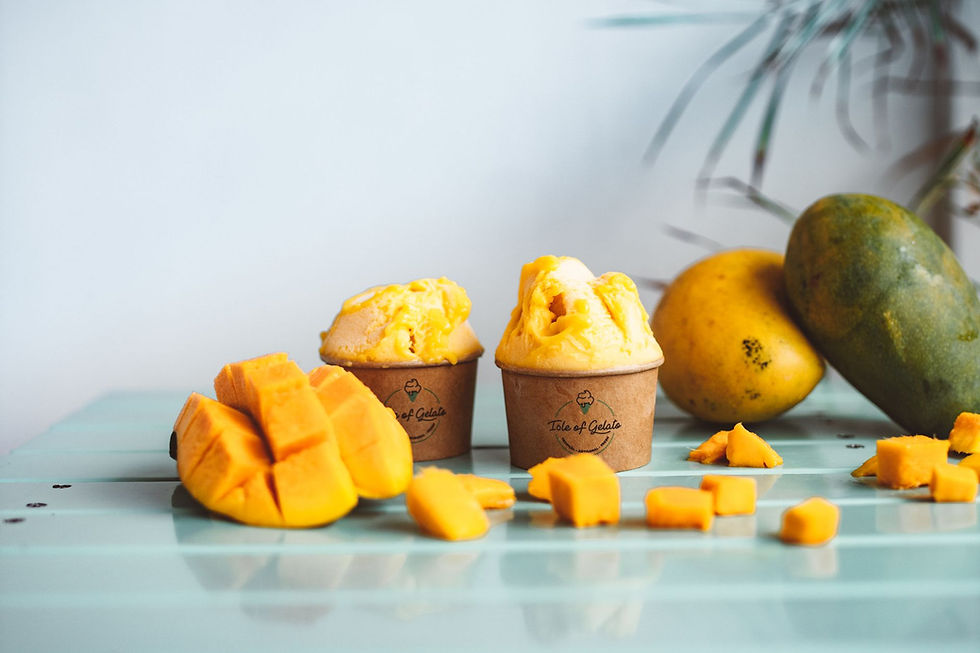
Seasonal rotation is the mechanism behind that quality. Florida mango peaks in summer; blood orange reaches full intensity in winter. When a gelateria ties its menu to harvest timing, the flavor in the cup reflects the ingredient at its best, not a standardized paste engineered for year-round consistency.
Signature flavors — affogato-inspired, lavender honey, salted pistachio — signal a creative maestro making decisions, not a supplier filling tubs from pre-mixed powders. These flavors can't be replicated by a distributor catalog.
Best for: Repeat visitors who want discovery on every visit, not the same 40 options every time.
Differentiator to ask about: Find out whether flavors are built from whole fruit or fruit paste. Paste is cheaper and produces a flatter, more uniform taste — whole fruit delivers the variation and intensity that defines a handcrafted product.
The following flavor categories illustrate how seasonal rotation works in practice:
• Summer fruits: Florida mango, passion fruit, watermelon — sourced at peak ripeness for maximum natural sweetness
• Winter citrus: Blood orange, Meyer lemon, grapefruit — higher acidity and aromatic intensity than off-season alternatives
• Year-round classics: Pistachio, dark chocolate, vanilla — quality depends entirely on ingredient sourcing, not seasonality
• Signature originals: Lavender honey, salted caramel, affogato-inspired blends — reflect the maestro's creative direction
7. How to Spot Low-Quality Gelato (Red Flags to Know)
Red Flags That Indicate Low-Quality or Inauthentic Gelato
You can assess gelato quality before your first taste — the display case, the colors, and the ingredient list each tell you something specific.
• Gelato piled high above the tub rim. That soft-serve mound is a sign of over-churning and high air content — a low overrun product sits flat and dense in its container.
• Neon colors. Natural pistachio gelato is pale, almost grey-green. Bright green pistachio or electric blue mint means artificial dye, not real ingredients.
• Open, uncovered tubs. Exposure to air and light triggers oxidation and ice crystal formation within hours. Quality shops use covered pozzetti or lids between servings.
• Long ingredient lists. Terms like "mono- and diglycerides," "carrageenan," or "artificial flavor" signal industrial production, not a handcrafted product made fresh that day.
Best for: First-time buyers at an unfamiliar shop who want a reliable way to assess quality before committing to a full serving.
Order Online
8. Premium Gelato Pricing — What You're Actually Paying For
Why Premium Gelato Commands Higher Prices
A single serving at a quality gelateria runs $5–$10 in most U.S. cities; Miami premium shops in Wynwood and Brickell typically price between $6–$9 per cup or cone.
Three cost drivers explain the gap. Traceable, high-quality ingredients cost 2–4x commodity equivalents. Daily small-batch production removes the bulk-freeze savings that industrial brands rely on. And a trained maestro — someone with formal gelato education and years of professional experience — commands professional wages, not minimum wage.
Grocery-store gelato brands like Talenti or the Häagen-Dazs gelato line run $5–$7 per pint, but they use stabilizers and are not fresh-churned. That's a fundamentally different product at a different point in the supply chain.
Differentiator: Use price per gram of actual flavor ingredient as a mental benchmark. A handcrafted gelato uses measurably more real pistachio per batch than a product built on pistachio paste — that ratio is where the price difference lives.
Best for: Budget-conscious buyers who want to understand the cost structure before deciding where to spend.
9. Nutritional Profile of Premium Gelato vs. Ice Cream
How Fat Content and Ingredients Compare Between Gelato and Ice Cream
Artisan gelato averages 100–150 calories per 100g versus 200–250 calories for full-fat ice cream — lower fat content drives that difference, not sugar reduction. According to the USDA National Agricultural Library, the fat and calorie differences between gelato and ice cream are directly tied to butterfat percentages and overrun rates in production.
Fat content tells the clearest story: gelato runs 4–8% fat compared to 10–18% in standard ice cream. That lower fat content also means gelato melts faster and is best eaten fresh — it isn't built for weeks of freezer storage the way packaged ice cream is.
Sugar content is comparable, or slightly higher in gelato. Sugar depresses the freezing point and takes on some of the textural role that fat plays in ice cream — removing it would change the product entirely.
Dairy-free premium gelato can reduce saturated fat further depending on the base. Oat milk versions typically run 80–120 calories per 100g. At V Gelato, the entirely plant-based menu — made with no preservatives or artificial additives — reflects this profile without positioning it as a diet product.
Framing note: Lead with flavor and craft, not calorie counts. The nutritional story is a secondary benefit, not the reason to choose this style of frozen dessert over a mass-market alternative.
How to Choose the Right Premium Gelato for You
Match your priorities — dairy needs, authenticity, flavor range, and location — to a gelateria using three decision axes and one visual checklist.
Axis 1: Dairy vs. dairy-free. If you want plant-based without texture compromise, look for oat or cashew bases and ask whether the maestro trained specifically on vegan formulations. A shop that added a dairy-free option as an afterthought produces a different product than one built entirely around plant-based production from day one.
Axis 2: Authenticity vs. a 'craft' label. A Bologna-trained maestro producing gelato daily in-house is a verifiable credential. A "craft" label on a commercial tub is not. Ask where they trained and whether production happens on-site.
Axis 3: Flavor range vs. depth. Twelve rotating seasonal flavors signals quality and ingredient focus. Forty permanent flavors signals a flavor-powder supplier.
Visual checklist recap: Covered pozzetti or lids, natural muted colors, a short ingredient list, and gelato that sits flat in the tub — not piled above the rim.
Miami readers: Proximity to a gelateria that produces on-site daily — not a commissary kitchen supplying multiple locations — is the single most reliable quality filter available. V Gelato produces small-batch gelato fresh daily at its Wynwood location, with Maestro Eric Dorval, trained at Bologna's Gelato University, overseeing every batch.
Frequently Asked Questions
What is the difference between premium gelato and regular store-bought gelato?
Premium gelato is made fresh in small batches using all-natural ingredients, while store-bought gelato relies on stabilizers, artificial flavors, and preservatives to extend shelf life. The production gap shows in texture: premium gelato is churned at lower speeds, incorporating less air, which produces a denser, creamier result. Store-bought versions typically contain 50–60% air by volume. At V Gelato, Maestro Eric Dorval — trained at Bologna's Gelato University — makes each batch fresh daily with zero artificial additives, a standard mass-market products cannot match.
Is premium gelato worth the higher price compared to supermarket brands?
Yes, if ingredient quality and texture matter to you. Premium gelato uses fresh, natural ingredients without fillers, which costs more to source and produce in small batches. You're also paying for daily production — not a product made weeks ago and frozen for distribution. For customers with dairy allergies or lactose intolerance, a fully plant-based premium option like V Gelato delivers the creamy texture of traditional dairy gelato without the compromise that most budget alternatives require.
Can premium gelato be fully plant-based without losing creaminess?
Yes — when the formula is developed by someone with formal gelato training. The creaminess in gelato comes from fat content, churning technique, and ingredient ratios, not from dairy itself. Maestro Eric Dorval spent over a decade refining a plant-based formula that replicates the dense, smooth texture of dairy gelato using all-natural ingredients. The result is a 100% dairy-free and gluten-free product that rivals traditional gelato in richness — not a lesser substitute.
How long does fresh premium gelato stay at its best quality?
Fresh premium gelato made without preservatives is best consumed within 2–3 days of production. After that, texture and flavor begin to degrade — ice crystals form and the dense, creamy consistency softens. V Gelato makes each batch daily specifically to avoid this window. If you're ordering for delivery or pickup, plan to enjoy it the same day for the best experience.
What should I look for when visiting a gelateria for the first time?
Start with the display case. Look for gelato stored in covered pozzetti (lidded metal containers), natural muted colors — especially in pistachio and fruit flavors — and product that sits flat in the tub rather than piled high. Ask whether gelato is made on-site daily and request a short ingredient list. A gelateria that can answer these questions confidently is almost always producing a better product than one that cannot. Tasting before committing to a full serving is always a reasonable request at a quality shop.
Conclusion
Premium gelato earns its distinction through three concrete factors: fresh daily production, all-natural ingredients with no preservatives, and the technical skill to execute both consistently. Those factors don't change whether the gelato is dairy-based or plant-based — the craft is the same.
For anyone who has written off vegan gelato as a pale substitute, the gap has closed. When a Maestro-trained formula replaces dairy without replacing quality, the result speaks for itself.
The clearest next step: order a scoop of V Gelato's current rotation through delivery or visit the gelateria in Miami to taste the difference between fresh, small-batch production and anything sitting in a supermarket freezer.
Recommended Articles
Explore more from our content library:
About the Author
Written by the Food & Beverage / Dessert Retail experts at V Gelato | Gelateria & Cafe. Our team brings years of hands-on experience helping businesses with Food & Beverage / Dessert Retail, delivering practical guidance grounded in real-world results.


Comments